
Blog post
Student Cell Phone Restrictions in Schools
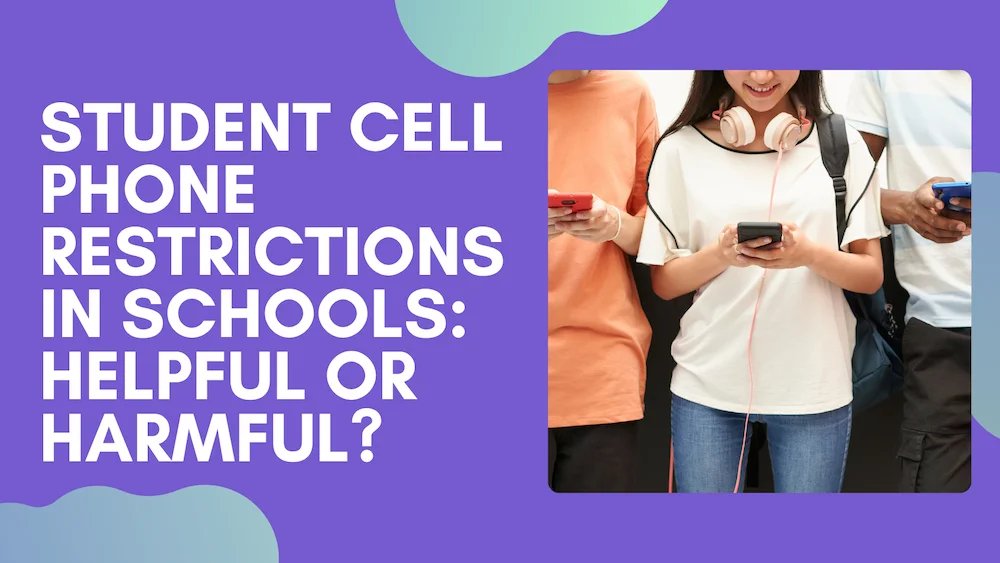
Subtitle: Examining the Benefits, Challenges, and Future of Smartphone Policies in Education
Walk through the halls of almost any middle school or high school today, and you'll notice one common denominator: nearly every student has a smartphone. These devices have become an integral part of modern life, serving as tools for communication, learning, entertainment, and organization. However, their growing presence in schools has sparked an ongoing debate among educators, parents, students, and policymakers.
Should schools ban cell phones during the school day? Should students have unrestricted access? Or is there a middle ground that encourages responsible technology use while minimizing distractions?
As school districts across the country continue to revise their technology policies, it's worth examining both the benefits and challenges of student cell phone use in schools.
Why Are Schools Restricting Cell Phones?
Many schools have introduced stricter policies in response to growing concerns about student attention, academic performance, social interaction, and mental health.
Common policies include:
- Phones must remain powered off during instructional time.
- Phones are stored in lockers or backpacks throughout the day.
- Students place phones in classroom storage systems during each class period.
- Limited use is allowed during lunch or designated breaks.
- Phones may only be used with teacher permission for educational activities.
Some districts have implemented school-wide "phone-free" initiatives, while others leave individual classroom expectations to teachers.
The goal isn't necessarily to eliminate technology—it is to create an environment where learning remains the primary focus.
Research on Classroom Distraction
One of the strongest arguments for limiting cell phones is their effect on student attention.
Even when students aren't actively using their phones, notifications, vibrations, or simply knowing the device is nearby can interrupt concentration. Students may shift their attention between instruction and social media, messaging, games, or videos, making it more difficult to engage deeply with classroom material.
Research has found that frequent interruptions can:
- Reduce sustained attention
- Lower information retention
- Increase time needed to complete assignments
- Encourage multitasking, which often decreases learning efficiency
- Contribute to lower classroom participation
Teachers also report spending valuable instructional time redirecting students who are distracted by their devices.
For students already struggling with executive functioning or attention challenges, minimizing unnecessary distractions can be especially beneficial.
The Mental Health Connection
Smartphones provide incredible opportunities for connection, but they can also contribute to stress and anxiety.
Students often experience pressure to:
- Respond immediately to messages
- Keep up with social media activity
- Compare themselves with peers
- Maintain online friendships throughout the school day
This constant connectivity can make it difficult for students to mentally disconnect and focus on learning.
Limiting phone use during school hours may offer students an opportunity to:
- Be more present in the classroom
- Develop stronger face-to-face communication skills
- Reduce social comparison
- Experience fewer digital interruptions
At the same time, it's important to recognize that phones can also provide emotional support. Some students use their devices to communicate with trusted family members or access mental health resources when appropriate.
The challenge lies in balancing these benefits with the need for an environment conducive to learning.
Cyberbullying Doesn't End at the School Door
Unfortunately, cyberbullying often follows students into the classroom.
Unlike traditional bullying, online harassment can continue throughout the school day through:
- Text messages
- Group chats
- Social media
- Anonymous messaging apps
- Photo and video sharing
Immediate access to smartphones allows conflicts to escalate quickly, sometimes disrupting entire classrooms.
Restricting phone use during instructional time may reduce opportunities for:
- Live online harassment
- Secret recordings
- Distribution of embarrassing images
- Social media conflicts during school hours
However, schools also recognize that technology education—not just technology restriction—is essential. Teaching students responsible digital citizenship remains an important part of preventing cyberbullying.
Emergency Communication: A Parent's Perspective
One of the most emotional aspects of this debate involves school safety.
Many parents appreciate knowing that their child can contact them directly in the event of:
- Medical emergencies
- Family emergencies
- Transportation changes
- School safety incidents
Some parents feel more secure when their children carry phones throughout the day.
However, emergency responders often note that during major emergencies, individual phone use can:
- Overload communication networks
- Spread misinformation
- Increase confusion
- Distract students from following staff instructions
Most schools encourage parents to communicate through established school procedures during emergencies while allowing administrators to coordinate accurate information.
Balancing parental peace of mind with emergency protocols remains one of the most difficult aspects of cell phone policy development.
What Teachers Experience Every Day
Teachers are on the front lines of this issue.
Many educators describe smartphones as one of the most significant classroom management challenges they face.
Common concerns include:
- Students texting during lessons
- Hidden phone use beneath desks
- Social media during instruction
- AI tools being used inappropriately on assignments
- Reduced class participation
- Increased conflicts over phone-related disciplinary issues
At the same time, many teachers recognize that smartphones can serve as valuable educational tools when used intentionally.
Teachers frequently incorporate phones for:
- Interactive polling
- Research activities
- Educational apps
- Digital collaboration
- Classroom response systems
- Photography for science labs or projects
Rather than viewing phones as inherently positive or negative, many educators advocate for structured, purposeful use.
The Parent Perspective
Parents often hold a wide range of opinions regarding school phone policies.
Some support stricter restrictions because they believe students need uninterrupted learning time and opportunities to develop healthier technology habits.
Others worry that complete bans limit communication or fail to prepare students to use technology responsibly in real-world settings.
Many parents ultimately share similar goals:
- Safe learning environments
- Academic success
- Responsible technology use
- Healthy social development
- Open communication
The conversation is less about whether phones are "good" or "bad" and more about how schools and families can work together to establish consistent expectations.
Finding a Balanced Policy
Perhaps the most effective approach is neither unrestricted access nor a complete prohibition.
Balanced policies often include:
- Phones stored during instructional time
- Limited access during lunch or designated breaks
- Teacher-directed educational use when appropriate
- Clear consequences for misuse
- Consistent enforcement across classrooms
- Digital citizenship education
- Ongoing communication with families
These policies acknowledge that smartphones are part of modern life while reinforcing that learning should remain the priority during school hours.
Schools can also help students build lifelong digital habits by teaching when technology enhances learning—and when it becomes a distraction.
Helping Students Develop Responsible Technology Habits
Schools play an important role, but families have an equally significant influence on how students learn to use technology responsibly.
Parents can encourage healthy habits by:
- Establishing screen-free homework routines.
- Creating device-free family meals.
- Discussing appropriate online behavior and digital citizenship.
- Modeling balanced technology use.
- Setting reasonable limits on recreational screen time.
- Encouraging activities that don't involve screens, such as sports, music, volunteering, or reading.
When students receive consistent expectations at both school and home, they're more likely to develop the self-regulation skills they'll need in college, the workplace, and everyday life.
Final Thoughts
The debate over student cell phone restrictions is unlikely to disappear anytime soon. Smartphones offer remarkable opportunities for learning, communication, and creativity, but they also introduce challenges related to attention, mental health, cyberbullying, and classroom management.
Rather than asking whether phones should be completely allowed or completely banned, schools may benefit most from asking a different question:
How can we teach students to use technology responsibly while protecting the learning environment?
The most effective policies are often those that combine clear expectations, consistent enforcement, opportunities for responsible educational technology use, and ongoing collaboration between schools and families. By treating smartphones as tools that require guidance—not simply privileges to grant or remove—educators can help students build the digital responsibility they'll need long after graduation.
Partnering with Families for Student Success
At Embrace Tutoring, we believe academic success extends beyond test scores and report cards. Developing strong study habits, effective time management, digital responsibility, and healthy learning routines are essential skills for lifelong success.
Whether your student needs academic support, executive functioning coaching, or preparation for high school and college admissions, our experienced educators are here to help.
Contact us today to schedule a free consultation and learn how personalized instruction can help your child thrive—both inside and outside the classroom.